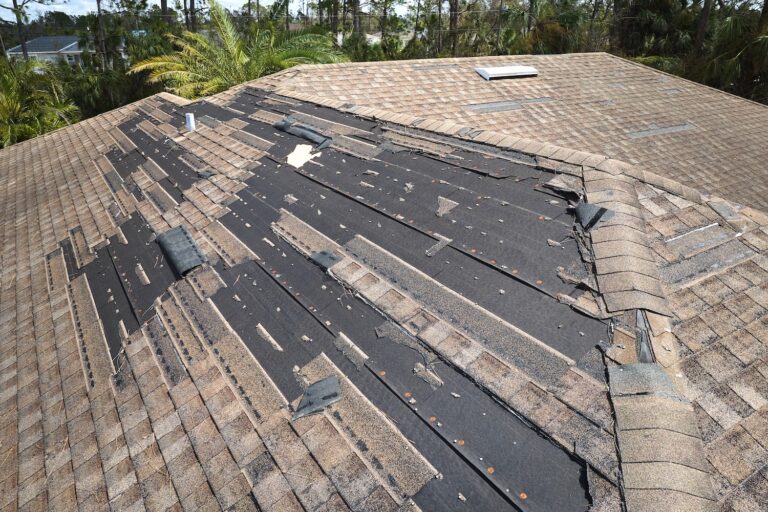
Replacing a roof can be one of the biggest expenses homeowners face, but your homeowner’s insurance may help cover the cost if the damage was sudden and unexpected. Understanding when insurance will pay for a roof replacement (and what’s excluded) can save you thousands and help you move quickly when a storm or accident strikes.
When Insurance Covers a Roof Replacement
Most homeowner’s insurance policies cover roof damage caused by sudden and accidental perils, such as:
- Storm damage (wind, hail, heavy rain, hurricanes, tornadoes)
- Falling objects (like trees or branches)
- Fire, vandalism, or other covered hazards
What’s usually not covered:
- Normal wear and tear
- Old roofs beyond their expected lifespan
- Improper installation or lack of maintenance
Steps to Get a Roof Replacement Covered
- Inspect the Roof After a Storm
Take photos and videos of any visible damage (missing shingles, leaks, dents from hail). - File a Claim Promptly
Call your insurance company and report the damage as soon as possible. Most policies require filing within a certain timeframe after the event. - Schedule an Adjuster Inspection
The insurance company sends an adjuster to verify the damage. - Hire a Roofing Contractor for an Inspection Report
A licensed roofer (like CHR Homes) can provide a professional assessment, including a detailed estimate in Xactimate (the software insurance companies use). This strengthens your claim. - Insurance Pays for Replacement
If approved, the insurer issues payment for the roof replacement, usually in two parts:- ACV (Actual Cash Value): Initial check minus depreciation
- Recoverable Depreciation: Paid after the work is completed, bringing payout closer to full replacement cost
Tips to Maximize Approval
- Know your deductible (typically $500-$2,500).
- Check if your policy is RCV (Replacement Cost Value) vs. ACV – RCV policies cover the full replacement cost, ACV only pays depreciated value.
- Document storm dates – linking roof damage to a specific storm event improves approval chances.
- Work with a contractor experienced in insurance claims – they can meet the adjuster on-site to ensure nothing is overlooked.
Navigating a roof insurance claim can feel overwhelming, but you don’t have to do it alone. By documenting damage, filing promptly, and working with an experienced roofing contractor like Custom Home Renovations, you can maximize your chances of getting your roof replacement covered. If your roof was recently damaged, schedule an inspection today and get expert support through the insurance process.